
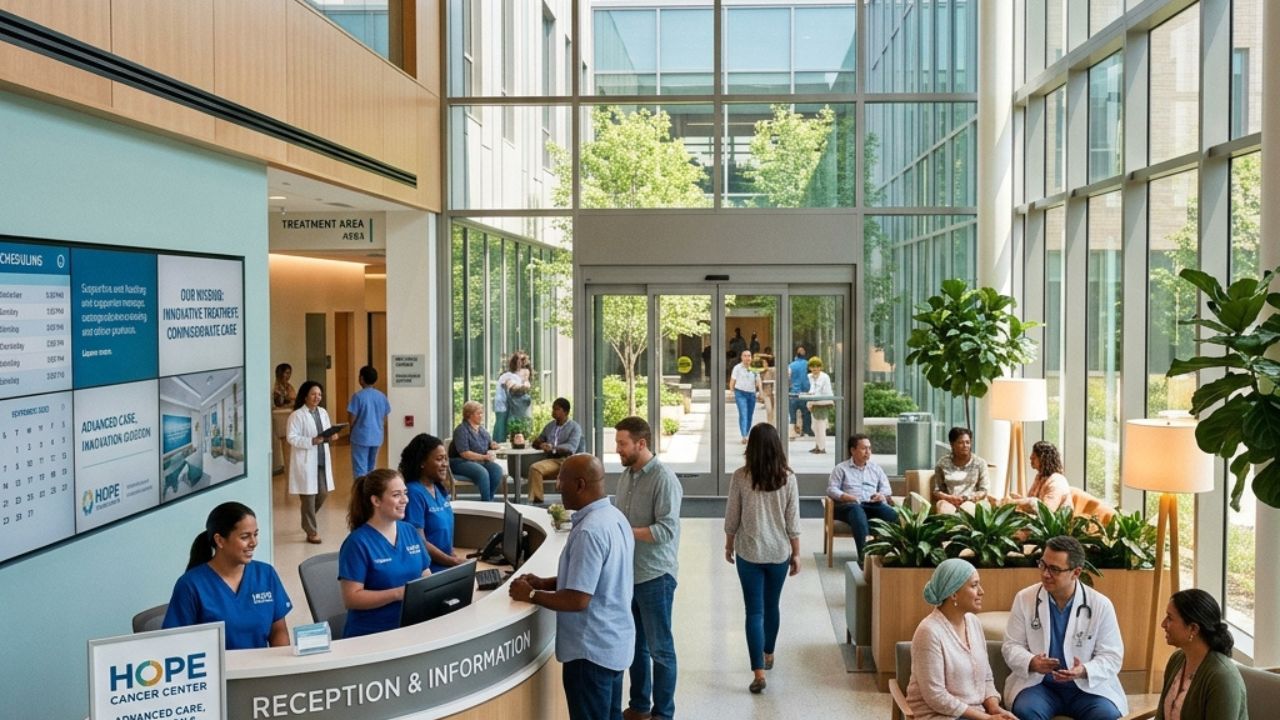
The best hospitals for advanced cancer care in the U.S. include MD Anderson Cancer Center, Memorial Sloan Kettering, Mayo Clinic Cancer Center, and Dana-Farber Cancer Institute. These institutions stand out for their NCI designation, access to cutting-edge treatments like CAR T-cell therapy and proton therapy, robust clinical trial programs, and consistently strong patient outcomes.
A cancer diagnosis changes everything. For patients facing advanced or complex cancer, the hospital they choose can directly influence their treatment options, quality of life, and long-term survival. Not all cancer centers are created equal—and the gap between a general oncology unit and a nationally recognized cancer hospital can be significant.
The United States is home to some of the world’s most advanced cancer treatment facilities. These institutions invest billions in research, attract the most specialized oncologists, and offer access to therapies that simply aren’t available elsewhere. For patients and their families navigating this process, knowing where to look—and what to look for—is critical.
This guide breaks down the criteria that define elite cancer care, then spotlights four of the country’s leading hospitals: MD Anderson Cancer Center, Memorial Sloan Kettering Cancer Center, Mayo Clinic Cancer Center, and Dana-Farber Cancer Institute. Whether you’re exploring options for yourself or a loved one, this post will help you understand what separates good cancer care from exceptional cancer care.
What Makes a Hospital Stand Out for Advanced Cancer Treatment?
NCI-Designated Comprehensive Cancer Centers
The National Cancer Institute (NCI) designates cancer centers based on their scientific leadership, research programs, and ability to translate laboratory discoveries into patient care. As of 2024, there are 72 NCI-designated cancer centers across the U.S., but only a subset hold the prestigious “Comprehensive” designation—reserved for institutions that meet the highest standards across research, clinical care, and community outreach.
Choosing an NCI-designated Comprehensive Cancer Center gives patients access to expertise and infrastructure that general hospitals simply cannot match.
Access to Advanced Treatment Modalities
The most competitive cancer hospitals offer therapies that go far beyond standard chemotherapy and radiation. Key advanced modalities include:
- Proton therapy: A form of radiation that delivers high doses directly to tumors while minimizing damage to surrounding healthy tissue—particularly valuable for brain, head and neck, and pediatric cancers.
- CAR T-cell therapy: A form of immunotherapy that genetically engineers a patient’s own T-cells to target and destroy cancer cells. The FDA has approved CAR T-cell therapies for several blood cancers, and leading centers are expanding its use through clinical trials.
- Robotic and minimally invasive surgery: Enables more precise tumor removal with shorter recovery times.
- Targeted therapy and precision oncology: Treatments matched to the specific genetic mutations driving an individual’s cancer.
Clinical Trials and Research Access
For patients with advanced or treatment-resistant cancers, clinical trials can offer access to therapies years before they reach the general market. Top hospitals run hundreds of active trials at any given time and often have dedicated teams to help patients identify eligible studies.
Multidisciplinary Teams and Personalized Medicine
Elite cancer centers assemble tumor boards—panels of specialists including medical oncologists, surgeons, radiation oncologists, pathologists, and radiologists—who collectively review each case. This multidisciplinary model reduces the risk of missed diagnoses and ensures treatment plans reflect the full complexity of each patient’s disease.
Patient Outcomes and Support Services
Survival rates and complication rates matter, but so does quality of life. The best cancer hospitals integrate palliative care, survivorship programs, nutritional counseling, mental health support, and financial navigation services into their standard care model.
MD Anderson Cancer Center (Houston, TX)
Consistently ranked #1 in cancer care by U.S. News & World Report, MD Anderson Cancer Center at The University of Texas is widely regarded as the gold standard for cancer treatment in the United States.
Specialties and Innovations at MD Anderson
MD Anderson treats virtually every cancer type, but has built particular strength in leukemia, melanoma, lung cancer, and sarcomas. The institution has been a pioneer in CAR T-cell therapy and continues to lead clinical research in immunotherapy combinations. Its Moon Shots Program, launched in 2012, focuses on accelerating the conversion of scientific discoveries into clinical breakthroughs for specific cancer types.
MD Anderson also operates one of the largest proton therapy centers in the country, the Proton Therapy Center, which has treated thousands of patients since opening in 2006.
Patient Experience and Support at MD Anderson
The hospital offers a dedicated international patient program, a patient and family advisory council, and one of the most comprehensive integrative medicine programs in oncology—covering everything from acupuncture to spiritual care. Patients traveling from out of state or abroad can access on-campus lodging through affiliated facilities.
Research Impact
MD Anderson consistently ranks among the top recipients of NCI funding. Its faculty published thousands of peer-reviewed studies in recent years, and the institution has been central to the development of several FDA-approved therapies, including checkpoint inhibitors now widely used in cancer treatment.
Memorial Sloan Kettering Cancer Center (New York, NY)
Founded in 1884, Memorial Sloan Kettering Cancer Center (MSK) is one of the oldest and most respected cancer centers in the world. Located in Manhattan, MSK combines deep clinical expertise with a research enterprise that spans basic science, translational research, and population studies.
Focus Areas and Breakthroughs at Memorial Sloan Kettering
MSK is particularly well-known for its work in breast cancer, prostate cancer, and gastrointestinal malignancies. The center has also been a leader in the development of MSK-IMPACT, a genomic profiling tool that analyzes tumors for hundreds of cancer-associated gene mutations—giving oncologists a detailed molecular map to guide treatment decisions.
MSK was among the first centers to administer CAR T-cell therapy outside of a clinical trial setting following FDA approval, and continues to run extensive trials across hematologic and solid tumor cancers.
Clinical Trials and Patient Access
MSK runs over 500 active clinical trials at any given time. The center’s research infrastructure allows patients to access experimental therapies early, and MSK has a dedicated precision oncology team that matches patients to trials based on their tumor’s genetic profile.
Patient-Centered Care at Memorial Sloan Kettering
MSK’s approach extends beyond treatment. The center offers psychiatric and behavioral health services, a robust survivorship program, and specialized care teams for adolescents and young adults with cancer—a population often underserved by traditional oncology models.
Mayo Clinic Cancer Center (Rochester, MN; Phoenix, AZ; Jacksonville, FL)
Mayo Clinic Cancer Center operates across three campuses in Minnesota, Arizona, and Florida, and holds NCI Comprehensive Cancer Center designation. What distinguishes Mayo Clinic from many of its peers is its deeply integrated model of care—one that places diagnosis at the center of every treatment decision.
Mayo Clinic’s Integrated Care Model
Mayo’s structure brings specialists from different disciplines together in a single location, allowing patients to receive consultations, imaging, lab work, and treatment planning within days rather than weeks. This coordination reduces delays and ensures a coherent treatment strategy from the outset.
Diagnostic Excellence
Mayo Clinic has a long-standing reputation for diagnostic accuracy, particularly in cases where prior diagnoses have been uncertain or incorrect. The institution sees a high volume of second-opinion cases each year, and its pathology and genomics laboratories are among the most advanced in the country.
Research and Education at Mayo Clinic
Mayo Clinic Cancer Center participates in NCI-funded cooperative research groups and runs trials across most cancer types. The institution also contributes significantly to cancer genetics research, particularly in hereditary cancer syndromes, and trains hundreds of oncology fellows annually.
Dana-Farber Cancer Institute (Boston, MA)
Affiliated with Harvard Medical School and Brigham and Women’s Hospital, Dana-Farber Cancer Institute has built a reputation for collaborative, patient-first cancer care. Dana-Farber treats both adult and pediatric cancers through its adult division and the Dana-Farber/Boston Children’s Cancer and Blood Disorders Center.
Dana-Farber’s Collaborative Approach to Cancer Treatment
Dana-Farber’s model emphasizes close coordination between its research laboratories and clinical teams. Discoveries made in the lab move quickly into clinical trials, and vice versa—clinicians bring real-world treatment challenges back into the research setting. This translational loop has contributed to multiple FDA approvals and major shifts in standard-of-care protocols.
Dana-Farber has been particularly influential in the treatment of multiple myeloma, lymphoma, and breast cancer. The institute’s work on PARP inhibitors—drugs that exploit genetic vulnerabilities in certain cancer cells—has changed how BRCA-mutated breast and ovarian cancers are treated worldwide.
Dana-Farber also places strong emphasis on equity in cancer care, running programs to improve access to clinical trials and specialized treatment for underserved communities across New England.
How to Choose the Right Cancer Hospital for Your Situation
With multiple world-class institutions available, choosing the right one depends on several individual factors:
- Cancer type and stage: Some hospitals have deeper expertise in specific cancers. MD Anderson is often preferred for leukemia and sarcoma; MSK for gastrointestinal and genitourinary cancers; Dana-Farber for hematologic malignancies and breast cancer.
- Geographic access: Mayo Clinic’s three-campus model can be advantageous for patients in the South or Midwest. MSK has satellite locations across the New York metropolitan area.
- Clinical trial eligibility: If experimental treatment is a priority, check each institution’s active trial database (ClinicalTrials.gov is a useful resource) to see which center is running studies relevant to your diagnosis.
- Insurance and financial considerations: Coverage varies significantly. Each institution has financial counseling services, but it’s worth confirming network status with your insurer before committing to a center.
Your Next Step in Finding the Right Cancer Care
Finding the right hospital for advanced cancer treatment is one of the most consequential decisions a patient or family will make. The institutions profiled here—MD Anderson, Memorial Sloan Kettering, Mayo Clinic Cancer Center, and Dana-Farber—represent the highest tier of oncology care available in the United States. Each brings distinct strengths, but all share a commitment to innovation, multidisciplinary collaboration, and patient-centered care.
If you or a loved one is facing an advanced cancer diagnosis, consider requesting a second opinion at one of these centers, even if you plan to receive ongoing treatment closer to home. Many offer remote second-opinion services that can inform your treatment plan without requiring travel.
Frequently Asked Questions
What is an NCI-Designated Comprehensive Cancer Center?
An NCI-Designated Comprehensive Cancer Center is a hospital or research institution that meets rigorous standards set by the National Cancer Institute for cancer research, clinical care, and community outreach. As of 2024, 53 U.S. institutions hold this designation. Patients treated at these centers generally have access to more clinical trials, specialized expertise, and advanced treatment technologies than those treated at non-designated facilities.
How does CAR T-cell therapy work, and which hospitals offer it?
CAR T-cell therapy is a form of immunotherapy in which a patient’s T-cells are extracted, genetically engineered to recognize cancer cells, and reinfused into the body. The FDA has approved several CAR T-cell therapies for blood cancers including certain leukemias and lymphomas. MD Anderson, Memorial Sloan Kettering, Mayo Clinic, and Dana-Farber all offer FDA-approved CAR T-cell therapies and are actively running trials to expand its use to other cancer types.
Is it worth traveling to a top cancer hospital if I live far away?
For patients with rare, aggressive, or treatment-resistant cancers, traveling to a specialized center is often worth considering. Top cancer hospitals offer access to treatments, clinical trials, and expertise that may not be available locally. Many—including MD Anderson and MSK—offer remote second-opinion programs, allowing patients to get expert input without traveling until a clear treatment plan is in place.
What is the difference between proton therapy and standard radiation?
Standard radiation (photon-based) delivers energy through the body, exposing healthy tissue on both sides of a tumor. Proton therapy stops the beam precisely at the tumor site, which reduces radiation exposure to surrounding organs. Proton therapy is particularly beneficial for cancers near sensitive structures—such as brain tumors, head and neck cancers, and pediatric cancers—where minimizing collateral damage is a priority.
How do I find out if I’m eligible for a clinical trial at one of these hospitals?
The most direct way is to contact the cancer center’s clinical trials office directly. You can also search ClinicalTrials.gov using your diagnosis, stage, and prior treatments to identify relevant studies. Most top cancer centers have dedicated oncology nurses or clinical trial coordinators who can help match you to eligible studies based on your specific case.